
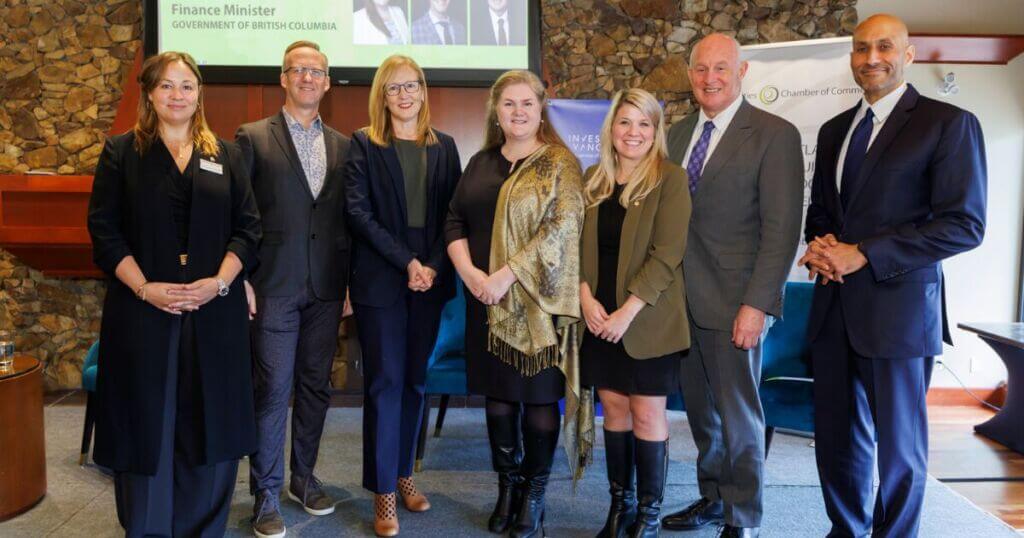
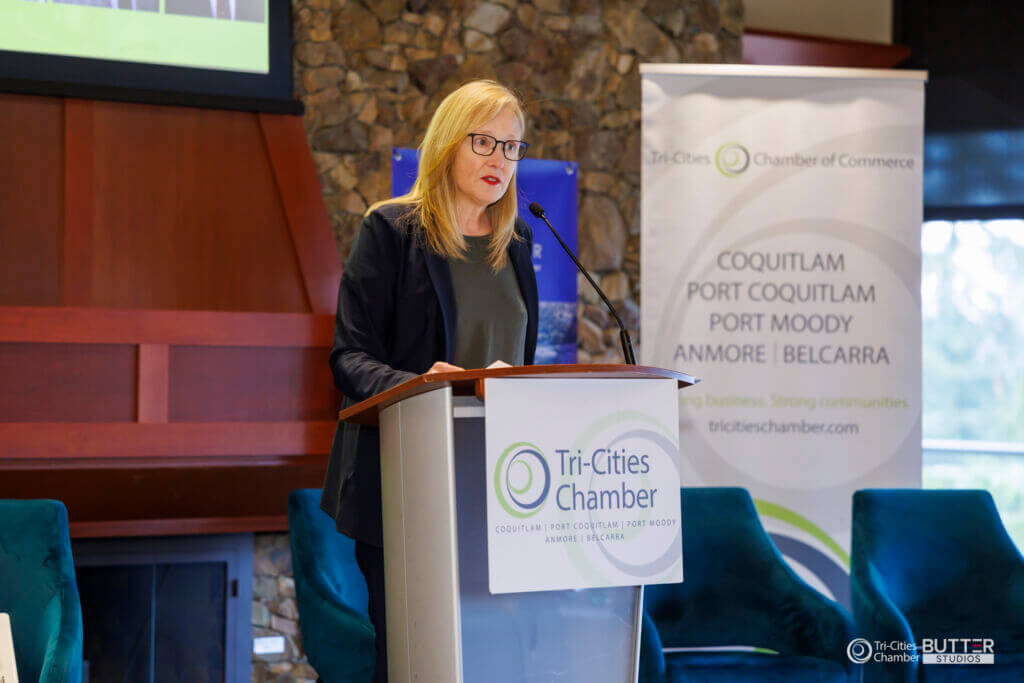
(Tri-Cities) March 16, 2026 On Friday, the Tri-Cities Chamber of Commerce welcomed members and community leaders for an important conversation on the provincial budget with Brenda Bailey and local MLAs.
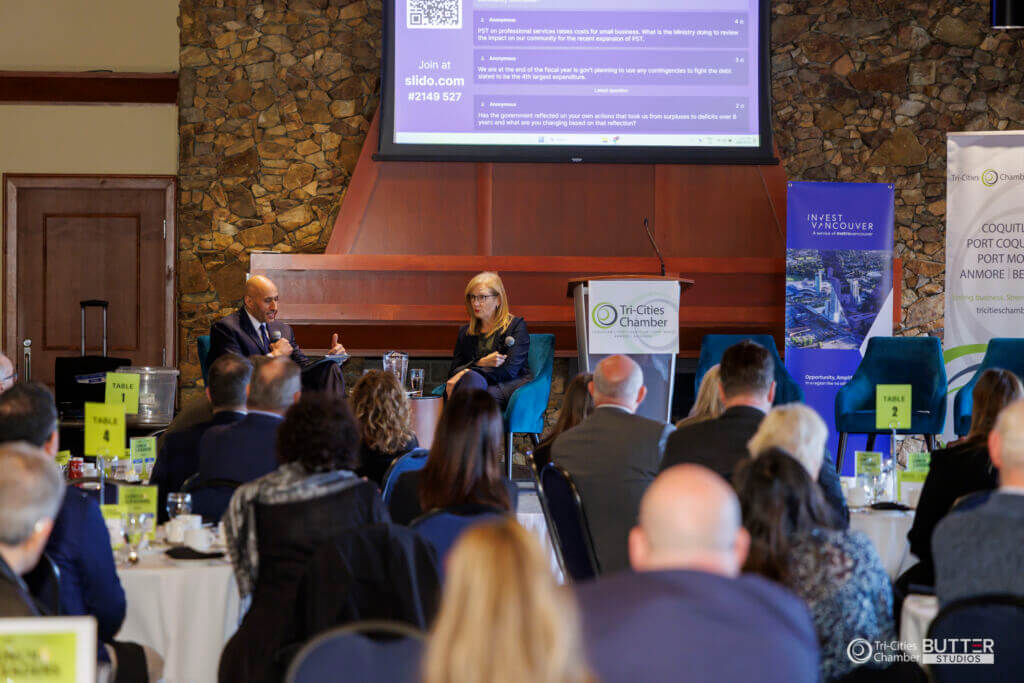
The Chamber was proud to provide our membership with direct access to the Minister to ask questions and share concerns about the newly released provincial budget. In advance of the event, we also circulated a member survey to ensure businesses who were unable to attend still had the opportunity to have their questions heard.
The discussion highlighted several key themes emerging from the budget and what they could mean for businesses in the Tri-Cities and across the province.
Expanding PST to More Goods and Services
One of the most discussed topics among businesses was the expansion of the Provincial Sales Tax (PST) to additional goods and certain professional services.
For many companies, this change increases operating costs for services that previously did not carry PST. Some accountants and economists have also raised concerns that expanding the tax base in this way could discourage investment or distort purchasing decisions, as businesses cannot claim full input credits the way they could under a value-added tax system.
For business owners, the implications are straightforward:
- Higher input costs
- Less available capital for hiring, expansion, or reinvestment
- Greater complexity in tax planning
During the discussion, Brenda Bailey noted that the changes are intended to better align British Columbia’s tax structure with other provinces, many of which already apply sales tax more broadly to services. The Minister indicated that modernizing the tax base reflects changes in the economy, where services now make up a larger share of business activity than when the PST system was originally designed.
Members emphasized that predictability and competitiveness in the tax environment remain critical for business growth.
 Concerns About the Size of the Provincial Deficit
Another major concern raised by the business community is the size of the projected provincial deficit. The budget forecasts multi-year deficits in the range of $13 billion as the province continues to invest heavily in core services and infrastructure.
While businesses recognize the importance of maintaining essential services such as healthcare and education, many are closely watching the long-term fiscal outlook.
The primary concerns expressed include:
- The possibility of future tax increases
- The potential impact on economic stability
- The risk that fiscal pressures could lead to delays in major projects or public-sector restraint
At the same time, the Minister emphasized during the opening remarks that the private sector investment will be critical to driving economic growth and strengthening B.C.’s long-term fiscal position.
Infrastructure and Construction “Re-Pacing”
The province also confirmed that some capital projects will be “re-paced,” meaning certain infrastructure investments may be slowed or delayed due to fiscal pressures.
This is particularly relevant for the construction, development, and supply sectors. Slower infrastructure delivery can impact housing supply, transportation improvements, and regional growth. It can also mean fewer near-term opportunities for local contractors, suppliers, and skilled trades.
Beyond the construction sector, these delays can also have a significant impact on non-profit organizations and healthcare providers, many of whom had projects fully planned and ready to move forward. Several hospital, community service, and care facility projects were already at a stage where organizations were prepared to begin construction, and postponements can create uncertainty for service delivery and long-term planning.
This is also particularly important for our Chamber, as non-profit organizations make up a meaningful portion of our membership. When community organizations face delays in critical projects—whether related to healthcare, housing, or social services—it affects not only their ability to serve residents but also the broader economic and community ecosystem that local businesses depend on.
Given the rapid population growth across the Tri-Cities, infrastructure timelines remain a key concern for businesses, non-profits, and municipalities alike as communities work to keep pace with demand for housing, transportation, healthcare, and essential community services.
Minister Bailey’s Budget Overview
During her keynote address, Minister Bailey explained that the government is navigating a challenging economic environment, including fiscal pressure and external risks such as global trade tensions.
She noted that the 2026 budget is intended to “meet the moment” by balancing deficit management with protecting core services like healthcare and education.
Key measures highlighted included:
- Reducing public sector staffing by approximately 15,000 positions
- Re-pacing capital projects to manage spending pressures
- Moderate tax adjustments
- Increased investments in skills training to address workforce shortages
- A new $400 million Strategic Investment Fund designed to leverage federal and private capital
The Minister also discussed efforts to reduce food costs by increasing competition and addressing inter-provincial trade barriers, while maintaining a strong focus on economic growth. The province’s goal is to position British Columbia among the fastest-growing provincial economies in Canada over the next two years.
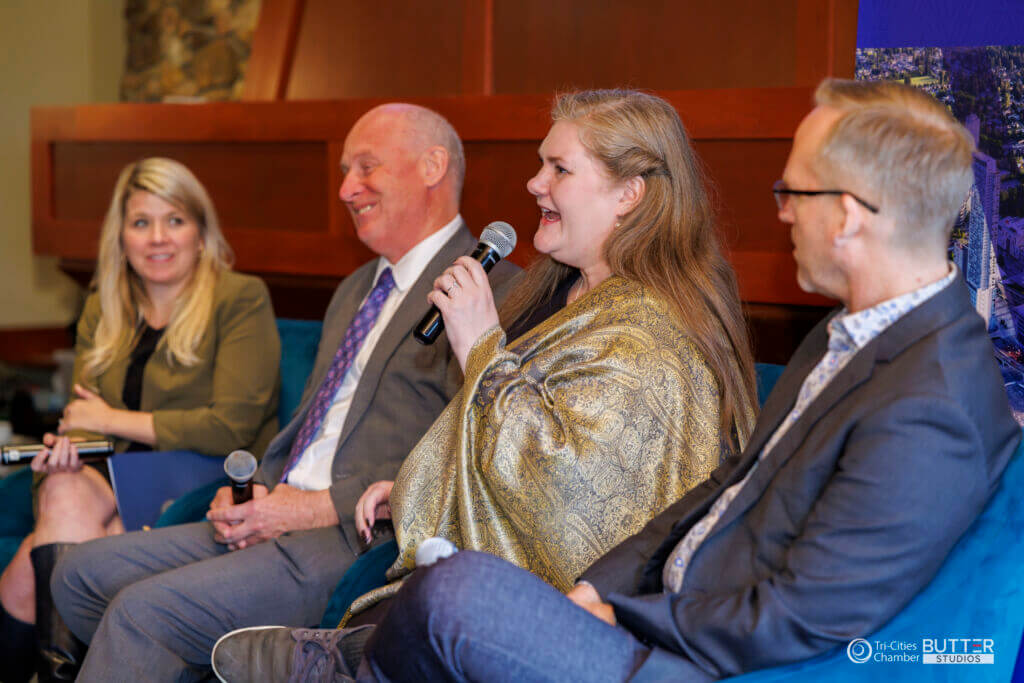
Panel Discussion: Infrastructure, Youth, and Innovation
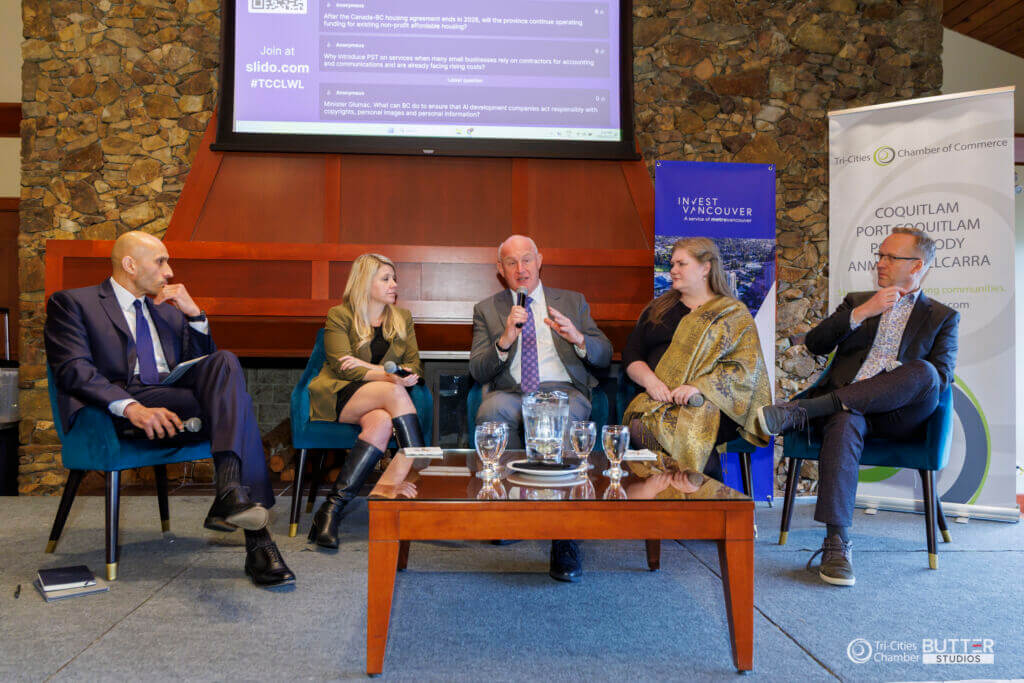
Following the keynote, a panel discussion with the four Tri-Cities MLAs explored several broader policy areas affecting communities and businesses.
Youth and Family Services
New Foundry BC centres are now operating across the province, offering walk-in mental health support for youth aged 12 to 25. Preventative programs such as Ending Violence is Preventable are also being emphasized in schools.
Transportation
Work is underway to establish a long-term sustainable funding model for TransLink, with a new framework expected by 2027 to address revenue challenges and increasing service demand.
Education Infrastructure
To respond more quickly to rapid population growth, the province is increasingly using prefabricated construction methods to expand school capacity more efficiently.
Technology and Innovation
The province is developing an action plan for artificial intelligence and quantum computing, with the goal of significantly expanding the sector’s contribution to the provincial economy. The plan is expected to be released at Web Summit Vancouver.
Community Safety
Following tragic incidents at public gatherings, the province is working with police and local organizers to improve safety coordination while maintaining welcoming community events.
Housing and Development
While municipalities have raised concerns about infrastructure costs tied to new development, the province maintains that its housing legislation provides clearer expectations for building while continuing to offer cost-sharing programs for municipal infrastructure.
A Valuable Dialogue with the Business Community
The event provided a meaningful opportunity for members of the Tri-Cities business community to engage directly with provincial leadership on the policies shaping the economic environment.
Events like this are a core part of the Chamber’s role—ensuring that local businesses have a voice in conversations that affect their operations, growth, and long-term planning.
The Tri-Cities Chamber of Commerce would like to thank our event sponsors, Invest Vancouver and Vancouver Fraser Port Authority, for their support in making this important discussion possible.
-30-
Since 1971, the Tri-Cities Chamber of Commerce has been the largest business association serving Coquitlam, Port Coquitlam, Port Moody, Anmore, and Belcarra, representing over 1,300 organizations across every sector. The Chamber fosters economic development, provides networking and growth opportunities, and advocates for businesses at all levels of government—ensuring strong business and strong communities.
The Tri-Cities Chamber is an active member of the BC and Canadian Chambers of Commerce.
For more information, contact:
Jennifer McKinnon, Chief Executive Officer
Tri-Cities Chamber of Commerce
ceo@tricitieschamber.com